A potted history
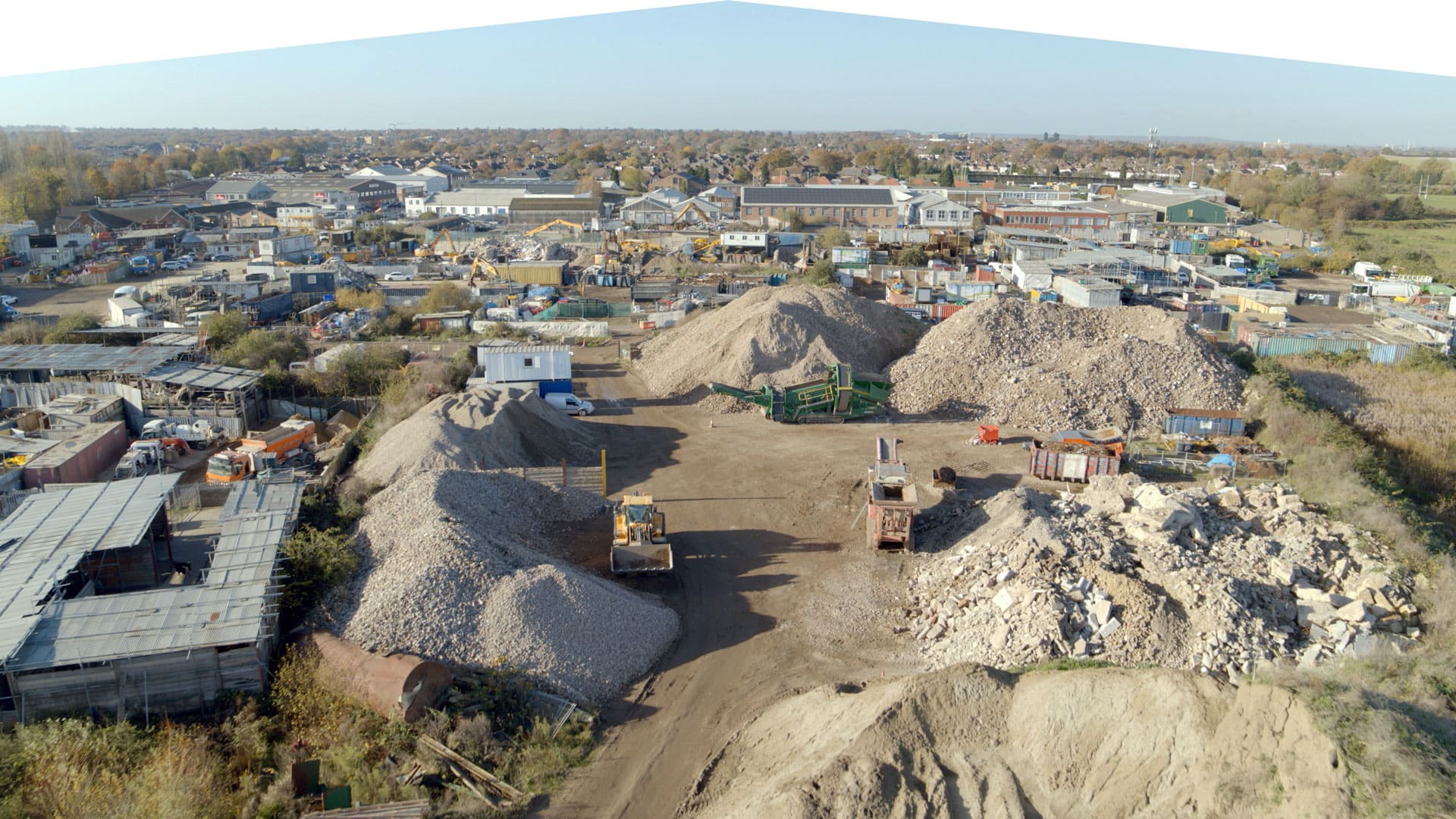
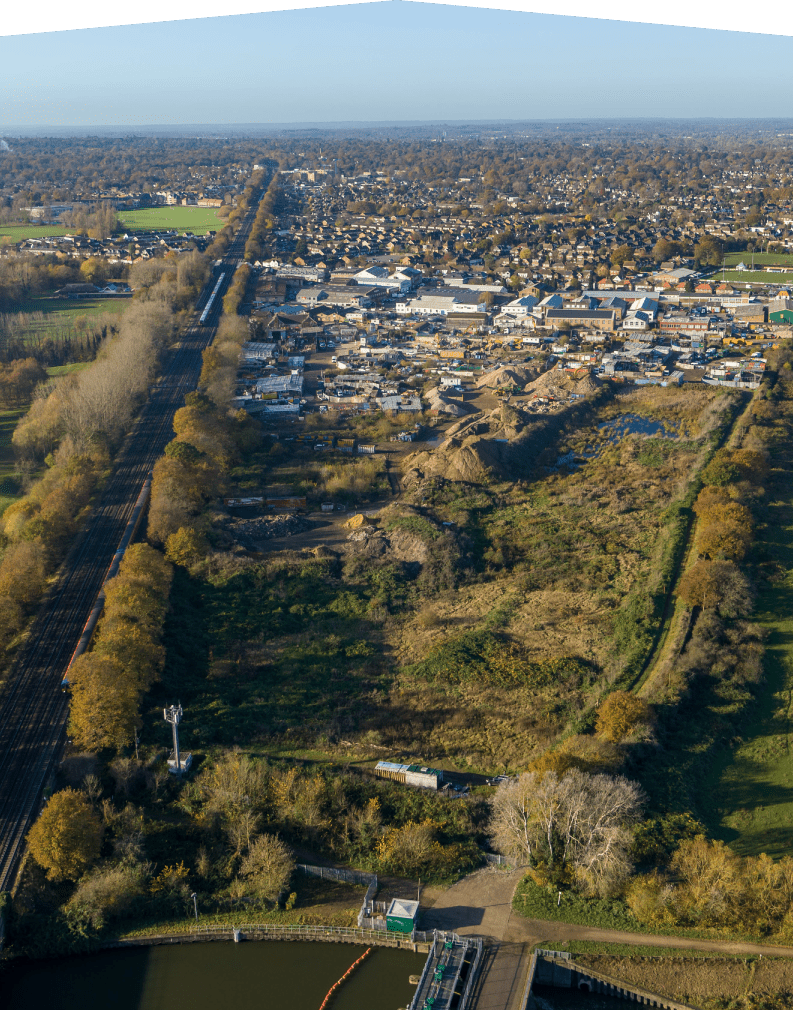
Weylands Treatment Works was acquired by Northumberland Estates in 2020. Before this, the site sporadically evolved from a Sewerage Treatment Works into a collection of paddocks, yards and spaces accommodating a variety of businesses, including waste recycling.
The site has been the subject of previous planning applications in 2013 and 2015, they were nothing to do with Northumberland Estates. These applications reflected the site’s allocation in the Surrey Waste Plan and included an anaerobic digestion facility, as well as several other waste processing and recycling facilities.
1910s
a building identified as the Weylands Sewage Works has been constructed in the southwest corner of the site.
1930s
the sewage works has been expanded eastwards with large cylindrical filter beds.
1950s
the sewage works has been further expanded east and northwards with large sludge beds occupying the central and eastern sections of the site.
1950s
a chemical works and two engineering works have been constructed in the eastern area of the site.
1990s
the sewage works is disused and an electrical substation is adjacent to the southern and southeast of the site.
2008
the sewage works is disused and an electrical substation is adjacent to the southern and southeast of the site.
2013
planning application was submitted for a development that included an anaerobic digestion facility, as well as several other waste processing and recycling facilities.
2015
a second planning application was submitted for a development that included an anaerobic digestion facility, as well as several other waste processing and recycling facilities.
2020
the site is again identified in the updated Surrey Waste Plan for waste safeguarding and expansion.
2025
outline permission granted for redevelopment, including a new electrical waste recycling facility, 5,000 square metres of new commercial buildings, significant additional landscaping and 40 affordable homes.
The site today
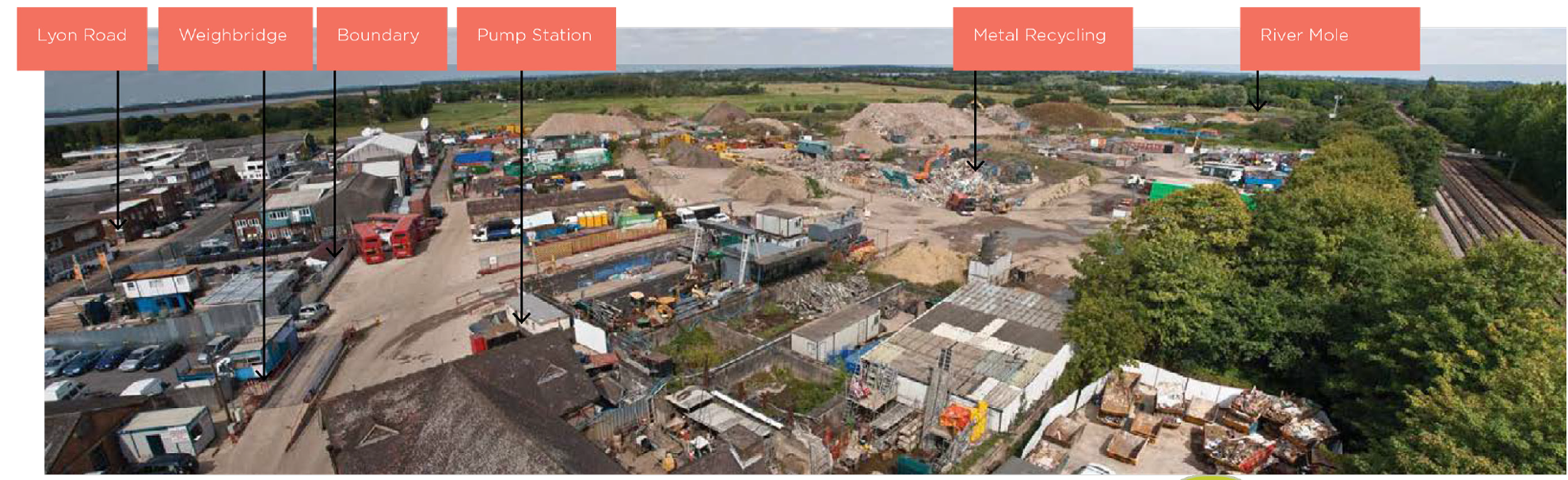

The site is used for a variety of waste and non-waste uses, including construction and demolition waste recycling, skip hire, metal recycling, scaffolding yards and open storage.
The site operates outside of the planning system and is not subject to a suite of environmental conditions and limitations. The existing activities on-site also generate a significant amount of dust, particularly in dry conditions. There are no limits on HGV trips or the volumes of waste processed. Having understood concerns raised with us by locals around dust and the volume of HGV traffic, we have designed a development that should address these issues.